Every year, some new interior design trend comes along that completely knocks your socks off. Five years ago, it was the shabby chic revolution. Two years ago everyone wanted knitted goods in their living room. And this year, it looks to be the rise of the freestanding bath.
Traditionally, renovators would build bathtubs into the walls of the bathroom and make them look like fitted units. In the 1970s and 1980s, it seemed like the ultimate mod-con, replacing the freestanding bath concept that dated back to the Victorian era.
But, before long, people started associating this kind of bathing solution with “cheap and cheerful.” And so now the pendulum has very much swung the other way. We now see freestanding baths as the luxury item, and built-in versions as “flat-pack.”
Freestanding baths are popular for several reasons. For one, they allow you to create centrepieces in your bathroom. When you first walk through the door, the room feels just like any other: an open space with objects scattered around. It’s only when you take some time to observe it, though, that you actually realise what you’re looking at.
Freestanding bath concepts have advanced a long way. Pipes come up from the floor and connect directly to the faucets, so that creates interest in itself. Add to that the design of the legs and freestanding baths can utterly change the mood in your bathroom.
So what’s out there? 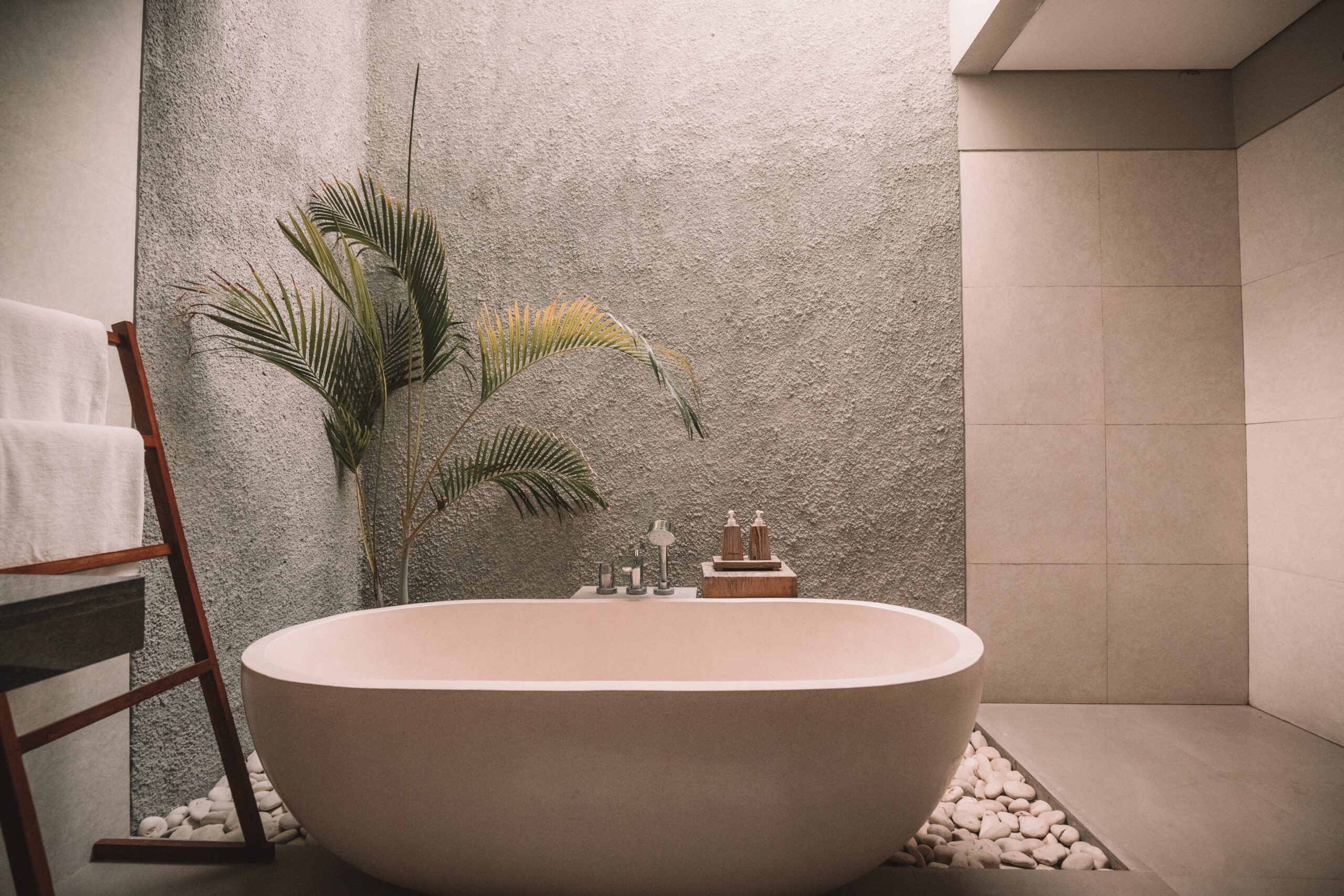
Flat-Base Ceramic Tub
Thanks to flat-base ceramic tubs, freestanding baths are going minimalist. On the face of it, this design looks similar to a regular bath. But you soon see that there’s no surround. The bath literally sits on the floor like the stool next to it. In the corner, you can see a single black mixer coming up from a pipe from the floor and, to the left of it, another knob for controlling the shower function.
This tub works well in neutral and modern-themed bathrooms. It’s not cheap, but it helps to bring the whole room together. The reason prices are higher is because the designers have to build the support structure out of the same material as the tub itself. Occasionally, the interior is hollow, but mostly, it is one giant slab of ceramic.
 Ornate Legs
You’ll sometimes come across freestanding tubs with ornate legs. Believe it or not, this is actually a cost-saving measure. The legs hold up what is essentially a traditionally-styled tub, replacing the shroud you see on enclosed models.
The silver legs in this example are attractive and extend from the tub law paws. Again, despite some of the flamboyance of the design, it works well with neutral interior decor. The flame-lime plumage at the top of the legs also adds to their charm.
Legged freestanding baths are especially appealing for homeowners who love vintage interior styles. They go well with wallpaper and moody bathrooms with non-white walls.
The rest of this white tub is actually quite standard. More adventurous designs replace the white ceramic with hammered copper. Some even feature gold leaf on the outside, just to add to the decadence, though you’ll pay more for that obviously.
 Round Utility Tubs
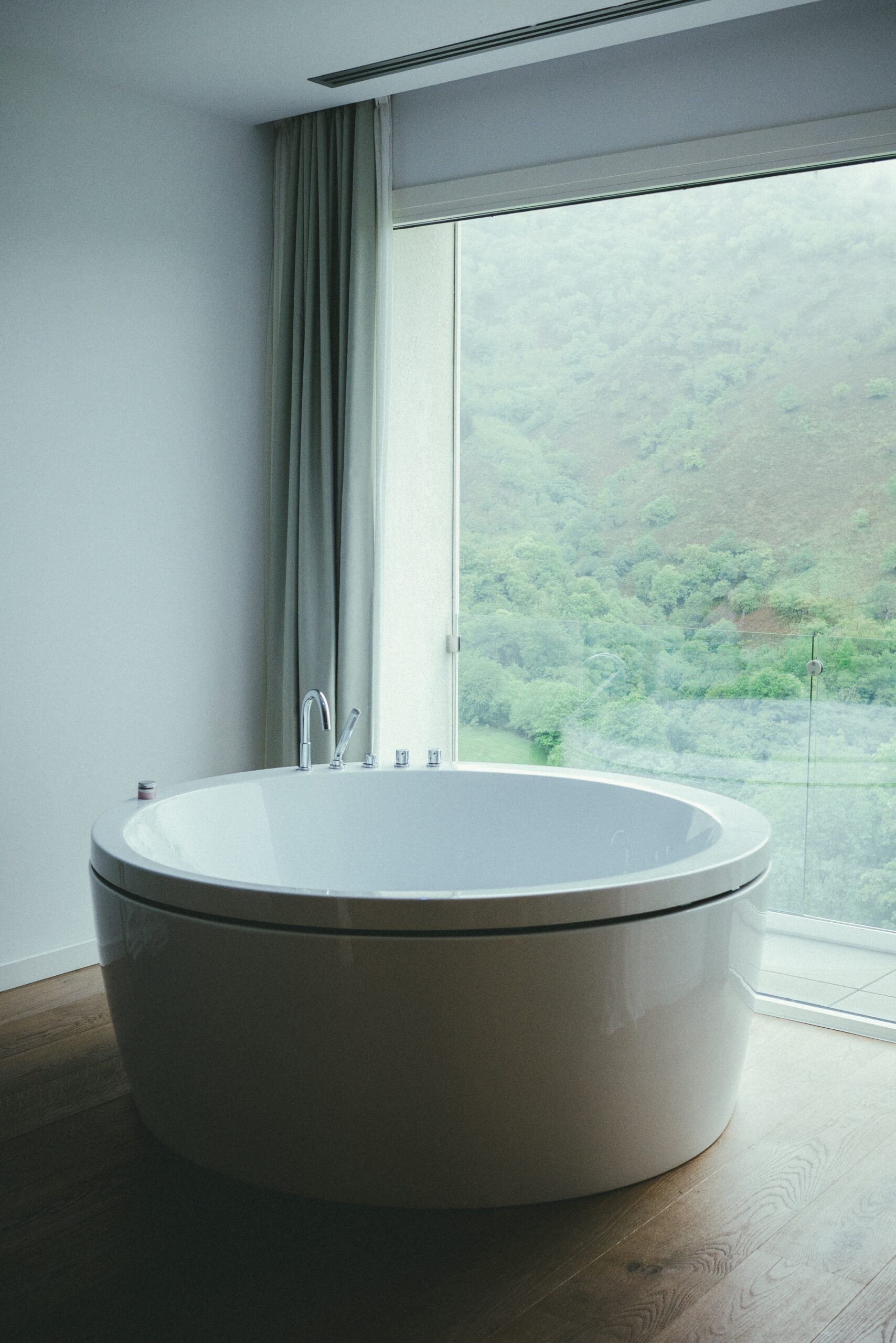
The designs we’ve seen so far have been purely aesthetic. But a lot of homeowners want bathtubs that make them feel great too. That’s where this next model comes in, These round tubs are for when you want to spread out and just indulge yourself. They provide ample room, and some even come with sensual jets, like a jacuzzi.
The other great thing about these tubs is that they let you accommodate more than one person at a time. So if you and your partner want to spend time soaking together, then you can.
 Pod-Style
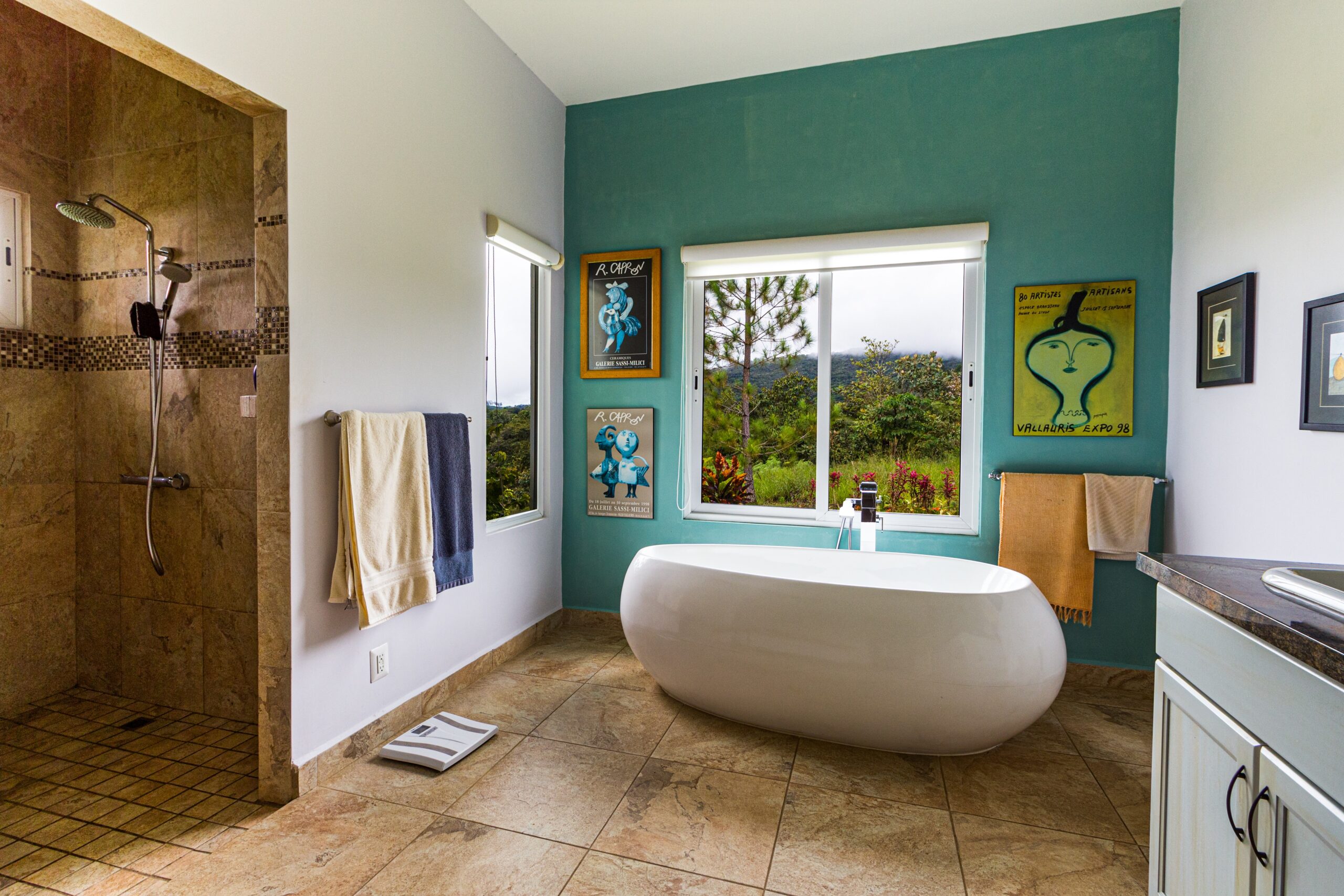
Pod-style freestanding baths are quite disruptive when you first see them. They appear to emulate some sort of pebble that you might find on the beach, with their bulging sides and irregular shape.
This particular model complements the bathroom well. Its neutral design creates simplicity in an otherwise complicated scheme. The main mixer faucet emerges from the floor beneath proudly in stainless steel, giving the whole ensemble an upmarket feel.
Zen
In the past, designing a zen bathroom was a real challenge. You either had to wing it or get a professional designer to do it for you – and they weren’t cheap. Now, though, more and more people are using free tools, like InteriorsME, to create bathroom designs like the one in this picture.
The purpose of zen freestanding tubs is to imbue your bathroom with a sense of peacefulness and wonder. And that’s certainly the feeling that you get when presented with this tub. It looks a little bit like you’ve cracked open a large rock on the beach and are now staring at its beautiful interior.
Zen tubs are aesthetically simple, yet incredibly beautiful. They instantly elevate your mood and make you feel like you’re on top of the world. The tub in this example compliments the pebbles behind it, as well as some of the other accessories in the room, including the lean-to towel rack and the plant in the background.
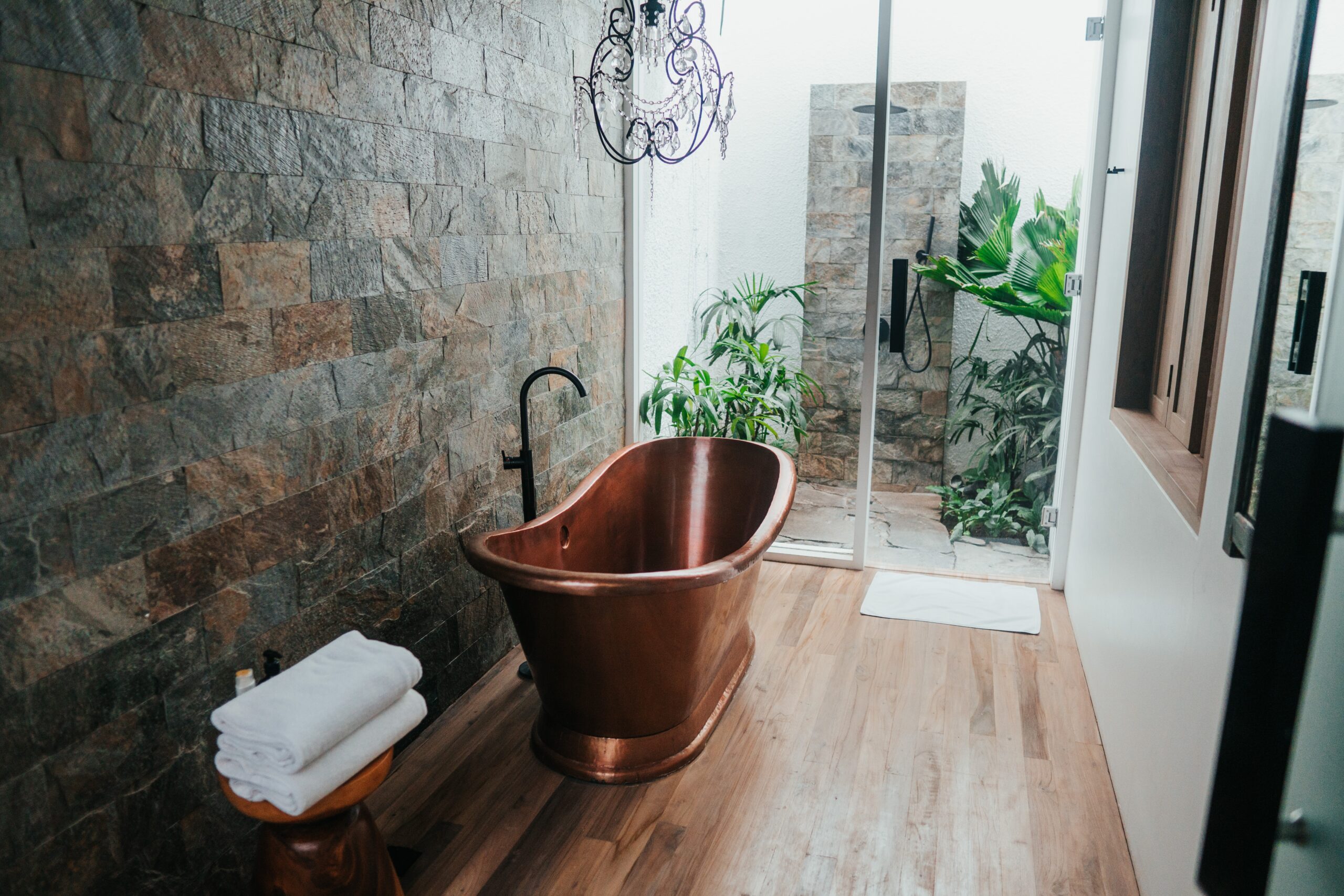 Copper
This copper bathtub shows what you can achieve when you use traditional materials. It has a stunning presence and lifts the entire room. The minimalist faucet doesn’t introduce. And the stone wall helps to reflect the mood the copper bath creates perfectly. You can see in this example that the designer spares no expense with the lighting either. The attractive oriental chandelier provides light for anyone spending time in the tub on a cozy evening.
So, as you can see, you have an enormous number of choices when it comes to freestanding baths. There isn’t just one style. And that means that they’re suitable for any bathroom, whether you prefer minimalist or modern, traditional or art deco.
Freestanding bathrooms are now among the most upmarket out there, which is changing how homeowners use them.

pdj3ej
x1kpgp